The Desire to Label campaign shares free resources to help professionals who have been taught to label people with disabling mental impairments and treat them differently.
This page provides an overview of resources to help people who have learned to label from CPR’s publications.
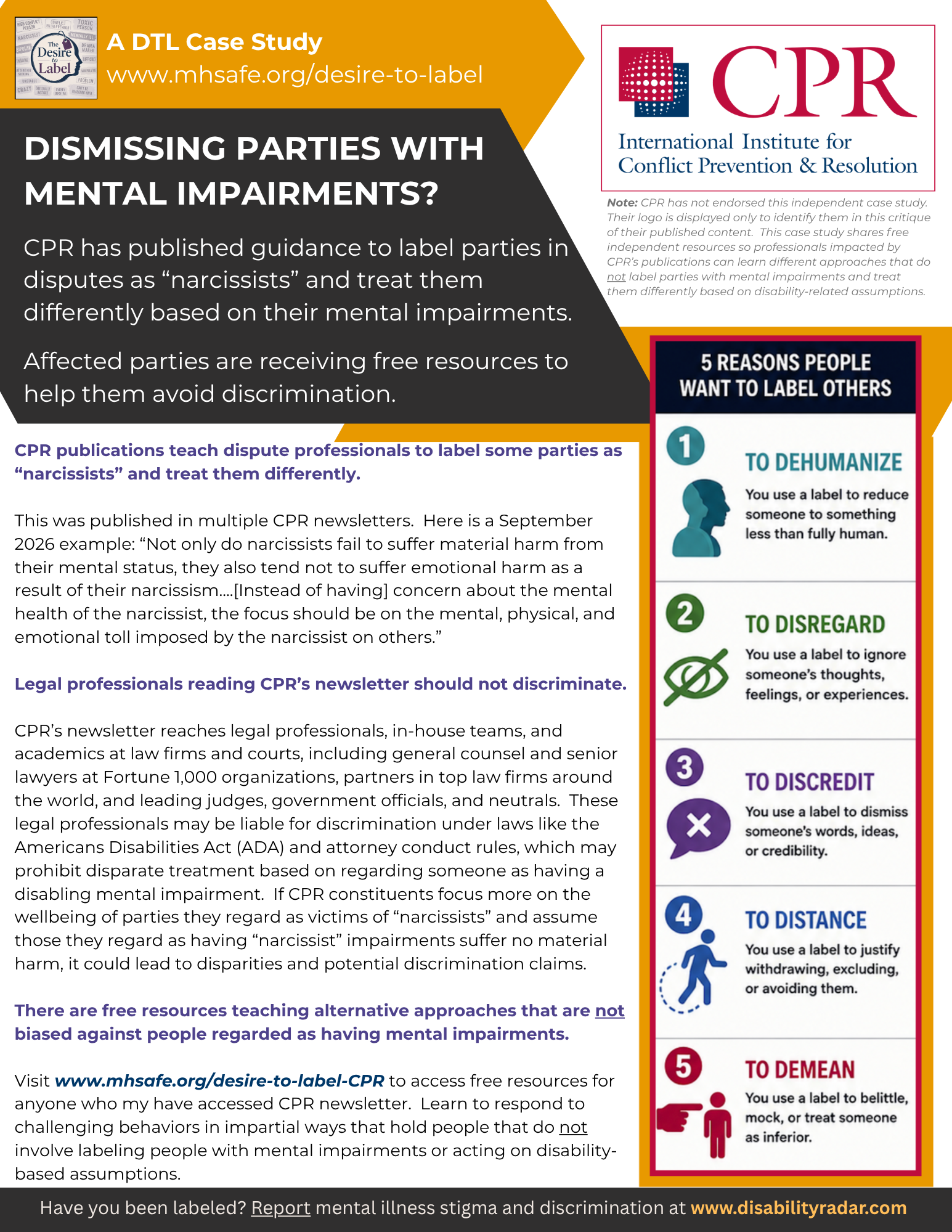
The editor of CPR’s Alternatives to the High Cost of Litigation gave permission to post copies of an article and related letters to the editor, all discussing CPR’s publication of guidance to label some parties as “narcissists” and treat them differently based on this label. Click here to access it.
Free Resources to Stop Labeling
There are resources available to help dispute resolvers avoid succumbing to prejudices about folks with mental illness, or other protected groups of people:
BiasResistantCourts.org provides free tools for practitioners discussing challenging behaviors without relying on biased backstories based on someone’s disability, gender, race, or other identity features. It is a project of the CUNY Dispute Resolution Center and MH Mediate, and funded by the AAA-ICDR Foundation. It was designed to teach 12 simple skills to practice in trauma-informed ways that prevent discrimination.
DisabilityRadar.com receives reports from anyone who sees mental illness prejudices in professional guidance, or directly encounters it themselves. That website is operated by MH Safe.
Help the Outreach
The Desire to Label campaign conducts outreach following the I ACT model. We aim to provide free addendum resources to people directly impacted by the content (I for Impacted), actors who may be following inappropriate guidance (A for Actors), communities that may have been exposed to the effects of the guidance (C for Communities), and teachers who would like to help educate folks on best practices (T for Teachers).
If you know of any impacted people who may have learned from this publication, actors who follow practices they learn from this publication, communities that may have been affected by people amplifying the ideas or practices advocated by this publication, or teachers who want to help their students study best practices related to the content in this publication – please write to DTL@mhsafe.org and the campaign will send free resources.